
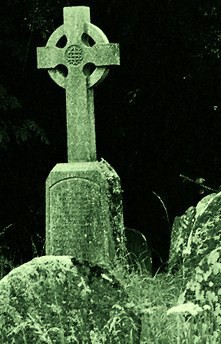
 As mentioned in Book II, Orthodox Catholics are buried facing Jerusalem (and Catholic graveyards face this direction, too). Why? Catholic tradition is strongly rooted in Jewish tradition with regard to the sanctity of the body after death. Just as the ‘wake’ replaced the Jewish tradition of keeping vigil beside an unburied body, it is believed that resurrection will originate in Jerusalem. * In similar fashion, the apse of Catholic churches faces East. In those cases where it doesn’t, Mass is celebrated with the priest facing East.
Why does a priest face Jerusalem? Because traditionally when a Catholic priest ascends the altar and offers the Aufer a nobis prayer that refers to his entering the ‘Holy of Holies’ (a reference to the inner sanctuary of the Jewish Temple in Jerusalem), he is stepping into the shoes of the Jewish High Priest.** That’s why a Catholic priest turns away from the congregation – in a sense recreating the High Priest entering the most sacred part of the Holy Temple, a place set apart for his use where no one else could go and where he would approach G-d in a way the congregation could not.
And the design of a Catholic church? It echoes the figure of Christ on the cross. The curved apse where the altar is located is the head of Christ facing Jerusalem, the transepts on either side his outstretched arms, the nave his body (filled with the congregation – the body of Christ in this world).
* since 1983, the Code of Canon Law has permitted Catholics to be cremated but the practice is still officially discouraged.
** I refer here to the traditional Latin Mass as defined by the Council of Trent, not the changes introduced subsequent to Vatican II.
 Ariella Abruzzi Novelist